So, you’re on the hunt for a new watch. Maybe it’s your first “real” timepiece, a special gift, or an addition to a growing collection. You’ve probably spent hours admiring designs, comparing movements, and reading reviews. But here’s a secret that many new watch enthusiasts overlook: the perfect watch isn’t just about its aesthetics or mechanics; it’s about how it fits you. And to unlock that perfect fit, you need to know your average wrist size.
It’s about empowering you with the knowledge to choose a watch that looks proportional, feels comfortable, and complements your unique build. Think of me as your horological mentor, guiding you past the common pitfalls to a truly satisfying watch-wearing experience. Let’s dive in.
Why Your Wrist Size Matters More Than You Think
Imagine buying a bespoke suit without knowing your measurements. It would be a disaster, right? It might hang awkwardly, pinch in places, or simply look ill-fitting. The same principle applies, perhaps even more subtly, to watches. A watch that’s too large can look clunky and overwhelm your wrist, making you appear as though you’re wearing a dinner plate. One that’s too small might get lost, appearing dainty or even childish.
Your wrist size dictates the harmony between the watch case, the lugs, and the strap. It affects comfort, aesthetics, and even how the watch feels during daily wear. Ignoring this crucial measurement is like trying to hit a target blindfolded; you might get lucky, but it’s far more probable you’ll miss the mark. Understanding your wrist size is the first step towards a watch that doesn’t just tell time, but tells your story with elegance and confidence.
How to Measure Your Wrist: A Simple Guide
Don’t worry, this isn’t rocket science. You don’t need specialised equipment or a degree in anthropometry. Just a couple of common household items will do the trick. The goal here is accuracy, but also consistency.
The Tape Measure Method
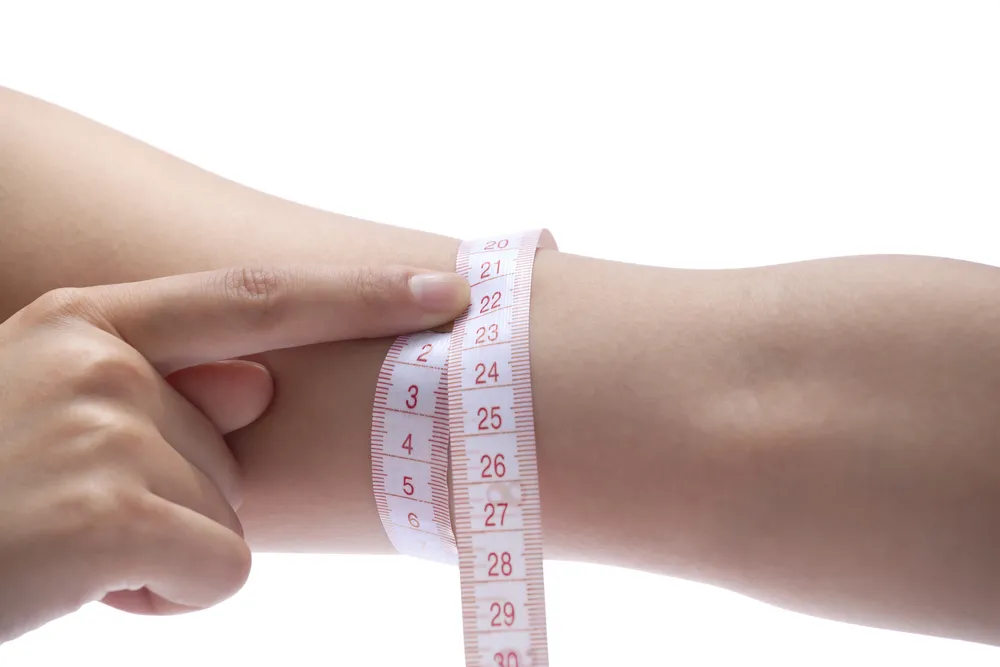
This is the most straightforward and precise method. If you have a flexible tailor’s measuring tape (the kind used for clothing), you’re in business.
- Locate Your Spot: Extend your arm, palm up. Find the bony protrusion on the outside of your wrist (the ulna head). You want to measure just below this bone, closer to your hand, where you’d typically wear a watch. This is generally the narrowest part of your wrist.
- Wrap It Up: Wrap the tape measure snugly around your wrist at this spot. Make sure it’s flat against your skin, not twisted, and not cutting off your circulation. It should be firm but comfortable; you should be able to slide a finger underneath if you try.
- Read the Number: Note the measurement where the tape overlaps. For consistency, measure in both inches and centimetres, as watch specifications often use both.
The Paper Strip Method
No flexible tape measure? No problem! A strip of paper and a ruler work just as well.
- Prepare Your Strip: Grab a piece of paper (a standard 8.5×11 sheet will do), and tear or cut a thin strip, about half an inch wide and at least 8-10 inches long.
- Wrap and Mark: Just like with the tape measure, wrap the paper strip snugly around your wrist, below the bone. Overlap the paper and mark the exact point where the strip meets its end.
- Measure the Strip: Lay the marked paper strip flat against a rigid ruler and measure the distance from the beginning of the strip to your mark. Again, record in both inches and centimetres.
A Quick Note on Dominant vs. Non-Dominant Wrists
You might notice a slight difference in size between your dominant and non-dominant wrists. Your dominant wrist, being used more frequently, might be marginally larger or more muscular. While some people prefer to wear their watch on their non-dominant hand for convenience (less interference with writing or other tasks), it’s worth measuring both if you’re truly obsessive. However, for most, measuring the wrist you intend to wear the watch on is sufficient. This guide assumes you’ll wear it on your non-dominant wrist, which is the most common practice.
Understanding Average Wrist Sizes
Now that you have your number, you might be curious where you stand in the grand scheme of things. It’s helpful to understand typical wrist sizes, but please, don’t get hung up on being “average.” Your perfect fit is unique to you.
Male Wrist Sizes: A Look at the Numbers
For men, wrist sizes typically range quite a bit.
- Small: Under 6.5 inches (16.5 cm)
- Medium: 6.5 to 7.0 inches (16.5 to 17.8 cm)
- Large: 7.0 to 7.5 inches (17.8 to 19.0 cm)
- X-Large: Over 7.5 inches (19.0 cm)
The most common range for men tends to fall in the 6.5 to 7.5-inch category.
Female Wrist Sizes: What to Expect
Women’s wrists are generally smaller than men’s, though there’s considerable overlap.
- Small: Under 5.5 inches (14.0 cm)
- Medium: 5.5 to 6.5 inches (14.0 to 16.5 cm)
- Large: Over 6.5 inches (16.5 cm)
Many women find themselves in the 5.5 to 6.5-inch range.
Debunking the Myth: There’s No “Right” Wrist Size
This is perhaps the most important takeaway from this section. There is no ideal or “right” wrist size. A smaller wrist isn’t “worse” than a larger one, and vice versa. What matters is finding a watch that harmonises with your wrist. Your mission isn’t to conform to an average, but to celebrate your individuality by choosing a watch that fits you perfectly.
Looking for watches that suit your wrist size?
Explore timepieces designed for different wrist proportions at Swiss Watch Dealer, where fit, balance, and craftsmanship come first.
From Wrist Size to Watch Fit
Now for the exciting part: translating your wrist measurement into practical watch-buying decisions. Watch specifications often list several dimensions, and understanding how they relate to your wrist is key.
Case Diameter
This is the most commonly cited measurement and refers to the width of the watch case, excluding the crown.
- Rule of Thumb: As a very general guideline, for men, a case size between 38mm and 42mm is often considered versatile. For women, 28mm to 36mm is a common range.
- The “Lug Overhang” Test: A common visual cue for a watch that’s too large is when the lugs (the parts where the strap attaches) extend beyond the edges of your wrist. If the case diameter is so wide that the lugs create this “overhang,” it’s likely too big.
Lug-to-Lug Distance
This is arguably more important than case diameter for a good fit. Lug-to-lug (L2L) measures the distance from the very top of one lug to the very bottom of the opposite lug.
- Why it Matters: A watch with a smaller case diameter but long lugs can still look and feel too big if the L2L distance exceeds the width of your wrist. Conversely, a larger diameter watch with short, downward-curving lugs might fit a smaller wrist surprisingly well.
- Your Personal Limit: Your lug-to-lug limit is roughly the width of your wrist at the point you measure. Aim for a watch where the L2L distance is equal to or less than your wrist width. This ensures the watch sits flush on your wrist without overhang, looking integrated rather than perched.
Strap Length
You wouldn’t buy pants that are too long or too short, so why neglect your watch strap?
- Balance is Key: The strap should not be so long that you’re left with an excessive “tail” after buckling, nor so short that it barely clasps.
- Holes for Adjustment: For leather straps, ensure there are enough holes for comfortable adjustment. For bracelets, you’ll need enough removable links to size it down correctly. If you have a very small wrist, you might need to consider straps labelled as “short” or “small” length.
Finding Your Perfect Watch
With your measurements in hand, let’s explore how to apply this knowledge to different wrist sizes. Remember, these are guidelines, not rigid rules. Your personal preference always reigns supreme.
For Smaller Wrists
If your wrist measures under 6.5 inches (or around 16.5 cm), you’ll often find that smaller, more refined watches suit you best.
- Case Diameter: Look for watches in the 34mm to 38mm range. Don’t be afraid to go even smaller, especially for dressier pieces. Many vintage watches, often 30-34mm, look incredibly elegant on smaller wrists.
- Lug-to-Lug: Crucially, pay attention to the lug-to-lug measurement. Keep it under 46mm, ideally closer to 42-44mm, to avoid overhang. Watches with integrated bracelets or very short, downturned lugs are your friends.
- Style Considerations: Think slim profiles, minimalist dials, and perhaps a thinner bezel. These elements enhance the sense of proportion and sophistication.
For Medium Wrists
If you fall into the 6.5 to 7.5-inch (16.5 to 19.0 cm) range, you have the widest array of options.
- Case Diameter: The 38mm to 42mm range is your playground. You can comfortably wear anything from a classic dress watch to a sporty diver.
- Lug-to-Lug: Keep it generally under 50mm. You have more flexibility here, but still be mindful of the “overhang” test.
- Style Considerations: This is where personal style truly shines. You can pull off a wide variety of looks, from robust chronographs to sleek everyday wear. Experiment and enjoy the breadth of choice!
For Larger Wrists
For wrists over 7.5 inches (19.0 cm), larger watches often look perfectly balanced, complementing your stature.
- Case Diameter: Watches from 42mm to 46mm (or even larger, depending on the watch style and your preference) will often look great. Don’t shy away from these “statement” pieces.
- Lug-to-Lug: You can handle longer lug-to-lug distances, often up to 54mm or more, without the watch looking out of place.
- Style Considerations: Larger watches, especially divers and pilot watches, were designed with functionality in mind and often feature robust cases and bold dials that sit beautifully on larger wrists. Don’t feel pressured to go smaller; embrace the presence a larger watch can offer.
Other Factors for the Perfect Fit
While measurements are foundational, a truly perfect fit involves more than just numbers.
Your Personal Style
A watch is an extension of your personality. Do you prefer understated elegance or a bold declaration? Consider the watch’s purpose: Is it a rugged tool watch, a sophisticated dress piece, or an everyday companion? The context influences what “fits” emotionally and stylistically.
Comfort is King
Even if a watch looks perfect on paper, if it digs into your skin, slides around excessively, or feels heavy and unwieldy, you won’t wear it. The watch should feel like a natural extension of your wrist, not an encumbrance. Pay attention to the weight, the way the case back sits, and how the strap material feels against your skin.
Bracelet vs. Strap
- Bracelets: Metal bracelets, especially those with solid links, can add significant weight. Ensure the clasp mechanism is secure and comfortable, and that there are enough micro-adjustment options on the clasp to fine-tune the fit. A bracelet should be snug enough not to slide freely, but loose enough for a finger to slip underneath.
- Leather/Rubber Straps: These are often lighter and more pliable, conforming more readily to your wrist’s shape. Leather will break in over time, becoming even more comfortable. Ensure the strap length is appropriate, so you don’t have an excessive “tail” or struggle to buckle it.
When in Doubt, Try it On: The Ultimate Test
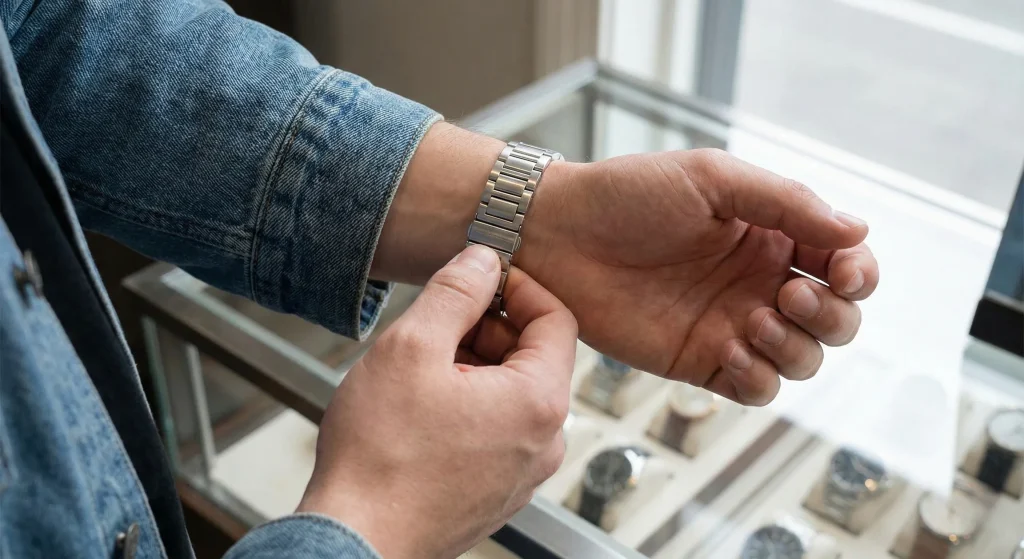
No amount of online research or measurement will ever replace the experience of trying a watch on your wrist. If possible, visit a local authorised dealer or a watch store. See how the watch sits, how it feels, and how it looks in a mirror. Take pictures from different angles. This hands-on experience is invaluable and will confirm whether your measurements and aesthetic preferences align in reality.
Takeaway
Measuring your wrist size is a simple yet powerful step towards finding your ideal watch. It empowers you to navigate the vast world of watches with confidence, choosing pieces that not only tell time but also tell your story beautifully. Don’t be constrained by the “average wrist size” or dictated by trends. Your perfect watch is one that looks great on your wrist, feels comfortable to you, and reflects your unique style.
For more guidance and to explore an extensive collection of watches tailored to all wrist sizes, visit Swiss Watch Dealer. Our buying guides and size guides can help you find that ideal timepiece, whether you’re after a luxury watch, a classic piece, or something uniquely suited to your style.
Start your watch journey today at Swiss Watch Dealer and discover the perfect fit for your wrist!